
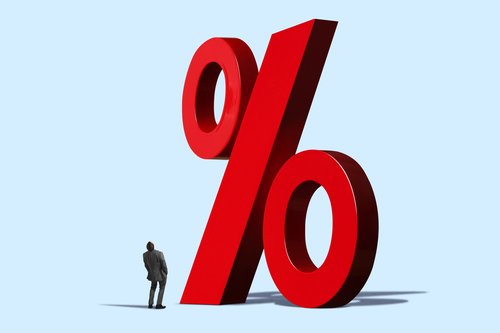
In its last interest rate decision of 2025, the Bank of Canada signalled it was done with cuts for the foreseeable future. Consider this your cue that the ultra low rates of the period between the financial crisis of 2008 and the height of the pandemic are not coming back (barring, that is, more economic cataclysms).
iStock-1329617114
The central bank left its trend-setting interest rate at 2.25 per cent. That’s much lower than the recent peak of five per cent but still significantly higher than the COVID-era low of just 0.25 per cent. In other words, the interest rate floor is higher.
The days when government, business and households could coast on dirt-cheap borrowing are over. Canada is now navigating a world of higher rates, one that requires a swift course correction to avoid future turbulence.
Ottawa and the provinces face growing fiscal pressures. At the federal level, the steep cost of rebuilding the country’s military capacity, a goal made only more urgent by the U.S. intervention in Venezuela, comes on top of years of bloated spending. Provincially, the big challenge will be to keep up with ballooning healthcare costs from an aging population.
Large and growing debts mean both levels of government are increasingly exposed to even small upswings in interest rates. To wit: The 2019 federal budget projected that a one percentage point increase in interest rates would, after five years, widen the annual budget deficit by $2.7-billion . A similar rate swing would now cost $7.9-billion annually after four years , according to the 2025 budget.
Shift your gaze to Canadian companies, and you’ll see a different problem. Here the main concern isn’t so much the size of corporate debt, but the level of business investment, which has been stubbornly low for more than a decade .
That trend is worrying for two reasons. First, if Canadian companies weren’t investing much when money was cheap – not to mention, when they had the certainty of free trade with the U.S. – what now?
Second, a healthy level of business investment is even more important now. That’s what fuels productivity and economic growth. And managing larger government debts at higher rates is much easier in a growing economy than in one that is just plodding along.
The Carney Liberals have taken some baby steps on the issue, including with some – largely temporary – tax cuts on new investments, particularly in the manufacturing sector battered by the trade war. But shaking the country out of its long investing slumber requires a much bigger jolt in the form of deeper, broader and permanent incentives.
Ottawa should also foster competition in highly protected sectors such as banking, telecom and the airline industry. Competition drives innovation as upstarts invest to displace established companies and incumbents do the same to fend off the new challengers.
For households, higher rates are generally good news for older Canadians, more likely to have a lot of savings and little or no debt, and bad news for younger people, who typically to have a lot of debt and little saved.
They’ve also proven a mixed bag for those hoping to break into the housing market. Higher rates simultaneously make it more expensive to borrow to purchase a home and tame home-price growth. So far, any affordability gains have been modest.
Governments should bear that generational inequality in mind when pondering how to spread the burden of mounting fiscal challenges. At the federal level, two obvious ways to rein in spending would be curbing Old Age Security payments to high-income seniors and raising the age to receive retirement benefits.
The latter should be phased in over time so as not to scuttle the financial plans of those close to retirement. Thankfully, even gradual reforms would yield big savings down the road, thanks to the power of compounding, reckons University of Calgary economist Trevor Tombe.
For example, a reduction of the growth rate of federal spending of just 0.1 percentage points a year today would shrink the stock of federal debt by the equivalent of five percentage points of GDP by the mid-2050s, Prof. Tombe estimates.
At a time when headlines serve up crisis after crisis, it’s easy to miss the quiet changes brought on by higher interest rates. But just like imperceptible tectonic shifts, they will have gigantic consequences. Canada should act accordingly.
© Copyright 2026 The Globe and Mail Inc. All rights reserved.
Comments are closed.
 The information provided here is for general information purposes only and is based on the opinion of the owners and writers only, subject to change without notice. It is not intended to provide specific personalized advice including, without limitation, investment, financial, legal, accounting or tax advice. Every effort has been made to compile this material from reliable sources; however, no warranty can be made as to its accuracy or completeness. Before acting on any of the above, please contact your advisor for individual financial advice based on your personal circumstances.