
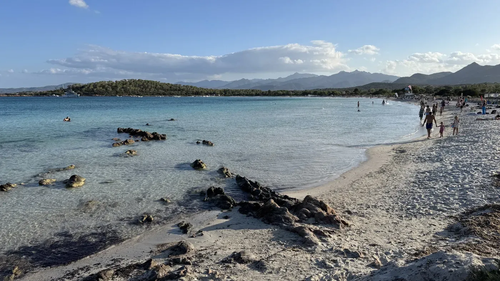
A week at a blue-zone retreat in Sardinia lays bare the tensions between longevity and loneliness.
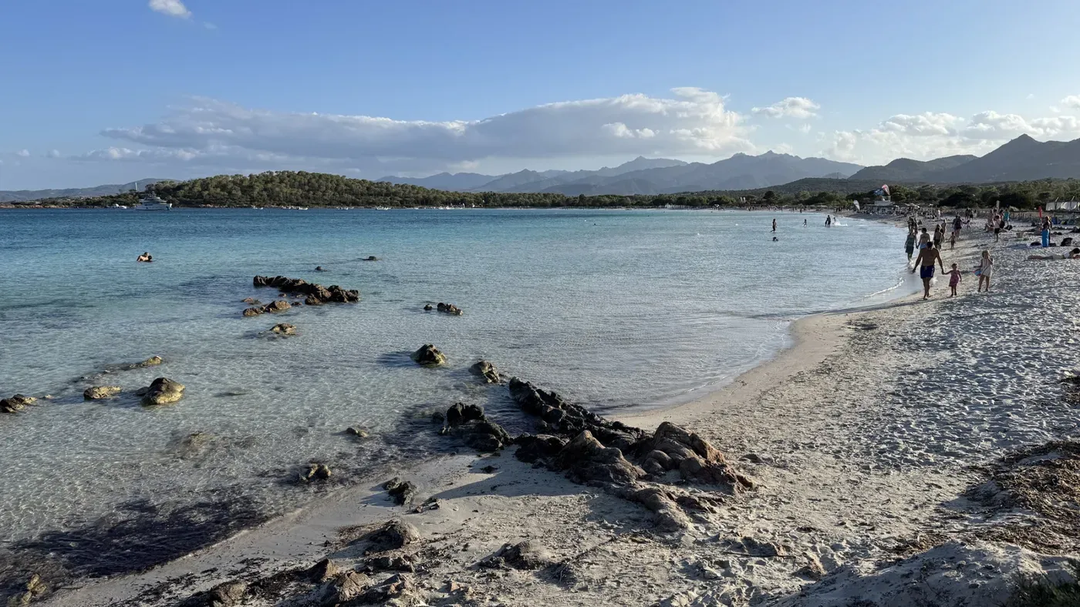
Sardinia, Italy, this past August.Photographer: Ahmet Talha/Getty Images
Leaving the library one afternoon, I brushed past a man with silver hair, only to realize later that he was a friend — someone I’ve repeatedly made and canceled plans with over the past year. I almost didn’t recognize him. In the time we’ve spent comparing calendars, we’ve both gotten older.
Back home, I study my own roots in the mirror and book an appointment for highlights. I shell out for a red LED face mask that makes my husband slightly afraid of me. Anxiety about aging must be reflected in my Google searches, because I’m served an ad on Instagram from the Great Wellbeing, a company that offers five-day retreats in Sardinia inspired by the island’s famous longevity.
“Embrace the village life,” urges the website, above a photo of a dozen people laughing around a table laid with wildflowers, brightly colored fruit and jugs of red wine. No one is on their phone. “Live alongside a community that values wellbeing and connection,” reads the caption. When I look up from my computer, I make accidental eye contact with a guy in the building across the street — my first human interaction in several hours.
Sardinia contains one of the world’s so-called blue zones: regions renowned for traditional lifestyles and exceptionally healthy populations. The label emerged in the late 1990s, when demographers Michel Poulain and Giovanni Pes used a blue pen to circle Sardinian villages on a map, marking those with an unusually high number of people living to 100 and beyond. The pair considered several possible explanations — genetic luck, reinforced by centuries of intramarriage, was one hypothesis — but the villages’ slow-paced, communal lifestyle was what captured the public imagination, thanks in large part to the work of American journalist Dan Buettner. He distilled the wisdom of the blue zones into nine catchy principles, including a plant-rich diet, moderate wine consumption, natural movement (herding sheep, climbing hills) and strong community ties.
In the mid-2000s, Buettner teamed up with Poulain to search for other longevity hot spots around the world, eventually identifying four: the Japanese prefecture of Okinawa; the Seventh-day Adventist community in Loma Linda, California; the Nicoya Peninsula in Costa Rica; and the Greek island of Ikaria. Then came the cookbooks, the TED Talk, the LLC — and the controversy over legitimacy, with one scientist arguing that the centenarians’ birth dates hadn’t been properly validated. Demographers rushed to Buettner’s defense.
The main idea, that it’s healthy to live in a community, is largely uncontested. “We know that social network is extremely important in improving longevity,” says Arjan Gjonça, a demographer at the London School of Economics and Political Science. And yet for many modern city dwellers, it’s easier to access experimental drugs than friends.
There’s never been a better time for travelers looking to get well in exotic locales. This particular tourism niche was valued at $650 billion in 2023, according to the Global Wellness Institute, and was estimated to be worth $1.3 trillion in 2025. Some of these vacationers have modest aims — to jump-start a fitness project or relax on a massage table — but places like Six Senses in Turkey and Canyon Ranch in Arizona cater to visitors with the more ambitious goal of life extension. At medical wellness retreats, visitors can kick off their holiday with epigenetic analysis, then consult specialists on how to slow the aging of their organs with individualized treatments for the colon, brain, heart, scalp, skin and teeth.
Skipping sleep and working overtime “used to be a badge of honor” among chief executives, says Mark Sands, vice president of wellness at Six Senses, but “there’s a massive increase in these guys taking really good care of their health.” Vicente Mera, the in-house physician at luxury clinic SHA Wellness in Alicante, Spain, tells me that the $11,000 Advanced Longevity package is “very, very popular.” It features IV drips, hyperbaric chambers and (at the company’s outpost in Cancún, Mexico, where they’re legal) stem cell and platelet-rich plasma therapies.
There are more than 100,000 centenarians in the US, and that number is expected to quadruple by midcentury. The wealthiest Americans are living longer than ever and driving an explosion of interest in healthy aging (at a time when life expectancy overall has stagnated and begun to fall). Peter Attia’s 2022 book, Outlive: The Science and Art of Longevity, has sold more than 2 million copies. Bryan Johnson, a tech mogul who takes more than 100 pills a day and gets blood transfusions from his teenage son, has millions of social media followers, many of whom upload their biomarkers to his “rejuvenation Olympics” leaderboard and embrace his motto, “Don’t Die.”
In both health and beauty, this trend is largely driven by technological advances. Wearable devices that track our glucose level, heart rate and blood oxygen have migrated from the brains of Silicon Valley tech nerds to millions of wrists around the world. Thanks to retinol and injectables, no one really knows what a thirtysomething is supposed to look like anymore.
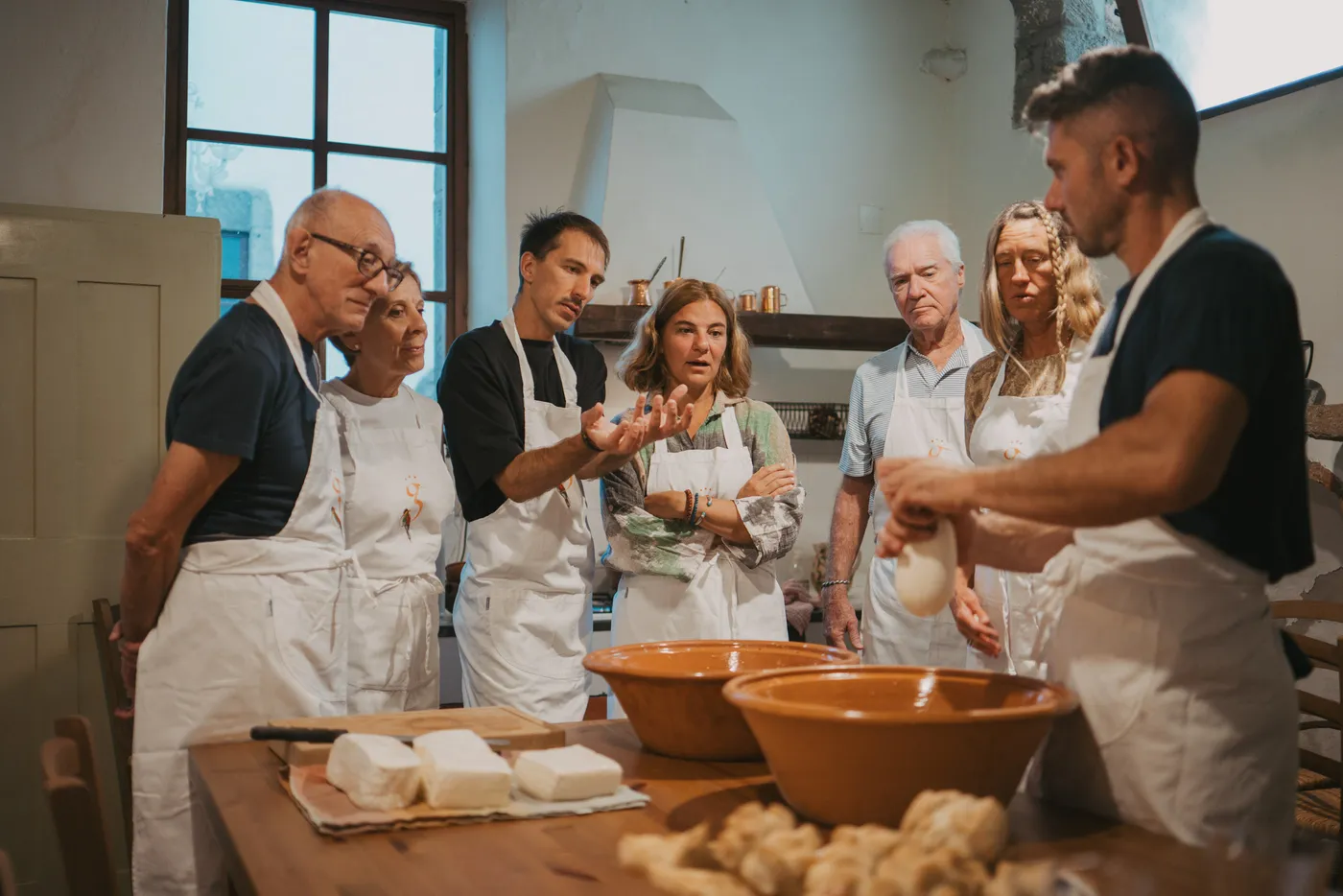
Another retreat cohort in Sardinia learns to prepare casizolu, a traditional cheesePhotographer: Stefano Zedda
Over Zoom, Maurizio Porcu, the host of the Sardinian retreat I saw on Instagram, walks me through their blue-zone approach: tasting local cheeses and cannonau wine; meeting weavers and fabric dyers who use ancient looms and natural pigments; learning to make gnocchetti and Pecorino-filled dumplings. It’s a far cry from the aggressive antiaging marketing I’m bombarded with elsewhere—but one that resonates deeply. In London, I’d just spent an entire workday without speaking to anyone. Within 24 hours of our call, I book my flight.
In Santu Lussurgiu, a sleepy town an hour and a half from the Sardinian capital city of Cagliari, lines of laundry hang in the sun, and shops close for riposo in the afternoon. The streets, running between small stone buildings, are quiet, save for the ringing of church bells and the occasional barking of dogs.
In person, 37-year-old Porcu is slender and ebullient. Born in Sardinia, he lived in London and Milan for nine years, studying and then working at various tech jobs before moving home a few years ago. “I couldn’t find my place” abroad, he tells our retreat group of six women — from across the US, UK and Australia — in October. “I was missing something.”
Since returning to where his family has lived for centuries, he’s never felt alone. His calendar is dotted with raucous, village-wide festivals: drinking homemade wine at the horse race in March; roasting lambs to mark the shearing of the sheep in May. In 2024, two of Santu Lussurgiu’s 2,000 villagers turned 100, and everyone came out to pay their respects.
Over the past two decades, fast food, technology and tourism have encroached on the low-stress, locavore lifestyles that made blue zones famous. Today, Nicoyans are more likely to go to McDonald’s than to grow their own rice, and Okinawa has one of the highest obesity rates in Japan. But central Sardinia remains a health hub, a result of “a cocktail of tradition, geography and their topographical advantage,” Buettner tells me over the phone. The villages are hilly and remote, making exercise unavoidable. The locals — “tough-minded, resolute people” — are committed to their way of life, resistant to ultraprocessed foods and electronic entertainment. Even more important is the strength of their tight-knit communities. “Social connectedness adds more to your health than any pill, any supplement, any longevity hack,” Buettner says.
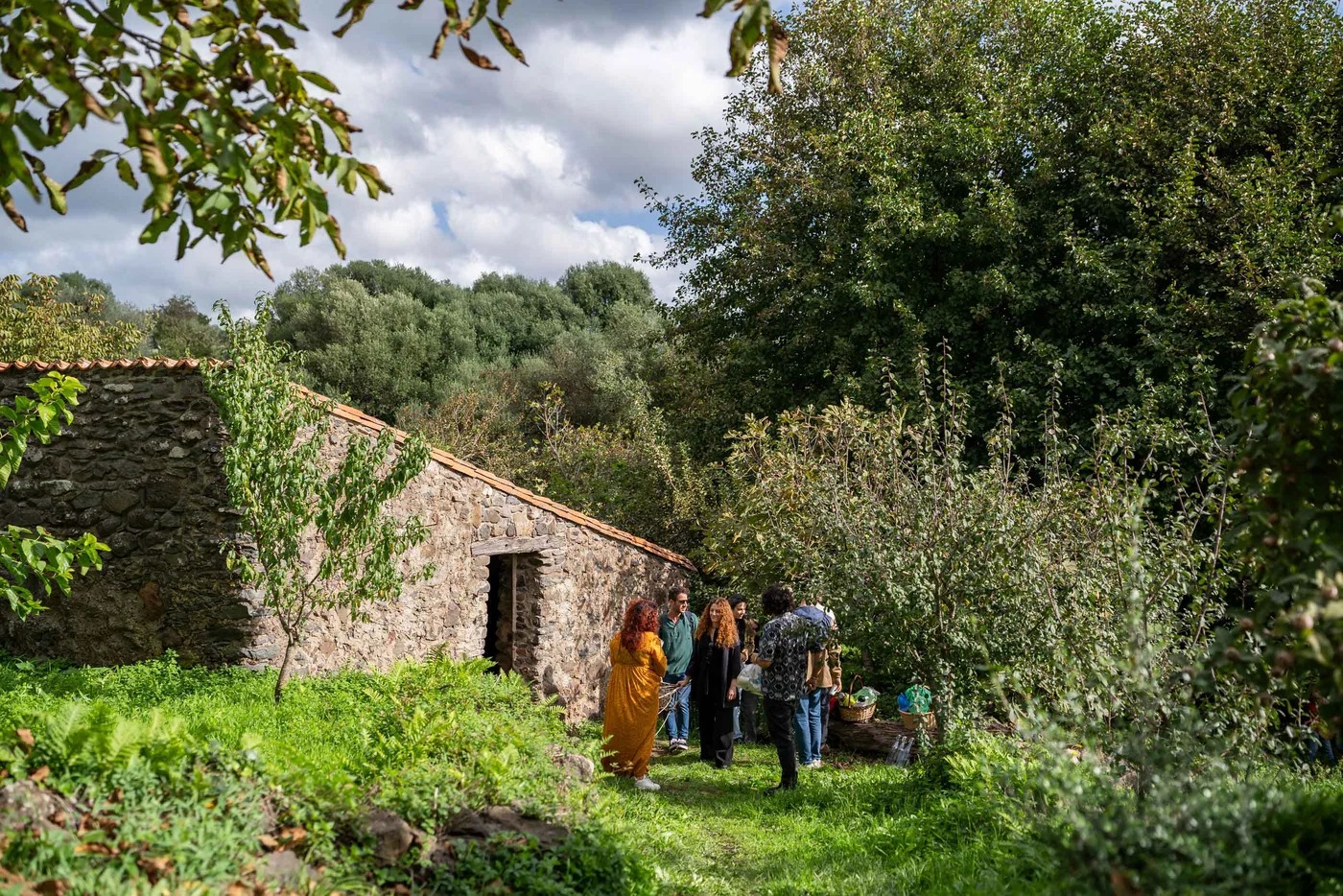
Touring Santu Lussurgiu’s historic gualchiera, a water-powered wool felting millPhotographer: Massimo Serra
My fellow travelers in Sardinia (an overworked therapist, an empty nester and a pair of middle-aged best friends, among others) aren’t especially concerned about the scientific controversy over blue zones. Two learned about them from the Netflix travel documentary Live to 100, in which Buettner, tanned and telegenic at 65, drinks tea with Okinawan centenarians and gathers herbs with elderly Greeks. They’re curious about their health, debating the best seeds for their breakfast (chia versus flax versus hemp) and worrying about radiation from microwaves and microplastics in Teflon pans. But they’re not so ascetic as to forgo daily wine (or even limit it to the evening or afternoon). The most panic our group feels all week is when no one can find a corkscrew one morning.
Santu Lussurgiu has embraced the blue zone mythos. The small library at Antica Dimora del Gruccione, the albergo diffuso (“scattered hotel” in Italian) where we are staying, displays a coffee-table book of interviews with local centenarians. At the Mannos bakery, we don aprons emblazoned with “Land of longevity” and sample wine with a label that says “kent’annos” (“may you live to 100”) next to a sketch of a weathered face.
Our retreat is a highlights tour of village life. We meet Giovanni, an impeccably dressed tailor who makes wedding suits on an antique pedal sewing machine. He invites us to guess his age, then does a jig when he reveals he’s 92. We meet Francesca, 32, who’s left her village of Sorgono only once, to attend university in Cagliari. She dropped out after two years because she missed her family and didn’t need a degree to work on her father’s farm. Giulia, a chef in her mid-30s with chic gray streaks in her hair that make me reconsider my salon appointment, tells us about her 5-year-old daughter, Olinda, named for her great-grandmother, who died at 103, surrounded by four generations of her family.
Our disparate retreat cohort soon becomes its own community. By Day 2, we’re swapping life stories, confiding in one another about breakups and bereavements. Porcu adds us to a WhatsApp group, Blue Zone Tribe, which soon threatens my phone’s memory capacity, as my travel companions upload enough videos to produce a Panorama-style documentary about our experiences pressing grapes and baking coccoi bread. Our camaraderie makes Porcu proud. “What’s the point of living to 100 if you’re alone?” he asks.
Loneliness is indeed a major problem for older Americans. A record 1 in 4 adults older than 60 in the US live on their own, compared with only 16% worldwide; among those from 50 to 80, according to data from the National Poll on Healthy Aging, more than 1 in 3 feel isolated. Yet they are less likely to reach out to family or friends when they feel lonely than to distract themselves with podcasts or TV. Many lack people to turn to: Half of Americans have fewer than four close friends, and—whether because of political polarization, physical distance or changes in social norms — as many as 1 in 4 are estranged from a relative. This trend toward solitude shapes daily life. A 2023 survey found that 26% of Americans ate every meal alone the previous day — an increase of more than 50% from two decades ago in 2003. In the UK, 20% of households don’t even own a dining table.
Loneliness is a known risk factor for a host of physical and mental health conditions, including heart disease and depression. That’s why doctors’ recommendations for longevity include a strong social network on top of regular exercise, sufficient sleep and a diet rich in fruit and vegetables. Meanwhile, the evidence for futuristic interventions such as infrared light and cryotherapy is decidedly mixed; the main benefit of some activities touted as longevity hacks, like cold plunging in winter, may derive less from cellular changes than from their communal nature.
Visitors to both longevity clinics and the blue zones often complain of living with a sense of malaise. But their approaches for fixing it couldn’t be more distinct.
Guests at SHA, says Mera, the in-house physician, arrive with a “general feeling that something is wrong,” and each guest gets a “personalized program” designed by a doctor. At Swissmed Health in Cyprus, there are “personalized injectables and personalized IVs,” according to Chief Executive Officer George Xydas. “Everything’s personalized to suit your wellness goals,” Joanna Chiu, a wellness travel adviser in the UK, says of such programs. Her longevity-focused clients are usually solo travelers who want to “focus on themselves.” Spending at least £5,000 ($6,730) per person, they’re determined to get their money’s worth, often doing “two or three treatments a day.”

An infrared sauna pod at Canyon Ranch TucsonPhotographer: Canyon Ranch
When David Oliver, a 33-year-old journalist who attended Canyon Ranch Tucson’s $20,000 Longevity8 program, wasn’t meeting with doctors or having body scans, he lounged by the pool and experimented with vasovagal stimulators by himself. He left the retreat feeling more anxious than ever about all the health data he received (particularly a suggestion to check up on his bone density).
On the other hand, Amy McIlvaine, a 67-year-old financial planner in Washington state, was finalizing her divorce and adjusting to living alone for the first time in 40 years, when she signed up for a two-week blue-zone-inspired hiking retreat in Greece. There, she “meshed quickly” with the “like-minded souls” on her trip; she found it “very healing” to share home-cooked vegetarian meals and take group hikes in the mountains.
One day in Sardinia, we meet Samuel Lai, a cheesemaker who lives in a fairy-tale cottage with pomegranate trees in the garden and a view of an old stone church. He ushers us down a rickety ladder, into a cellar he built himself, and shows us how he gives each of his hundreds of wheels of cheese a weekly olive oil massage. After plating slivers of eight different cheeses, some coated in charcoal or beeswax, others washed in beer, he tells us about growing up in the village of Gergei, surrounded by siblings, parents and great-grandparents; how he left to join the army; how, even when he was thousands of miles away in Iraq, he never felt lost in the world.
“When you have such strong roots,” he says, with Porcu translating, “you always feel that you belong.” The group is suddenly silent. I look down at my cheese. I was born in Chicago; I’ve been back once. Lai’s brother lives a few hundred meters down the road. Mine lives in South Korea.
In certain circles, mobility — to the point of geographic indifference — is a status symbol. In a New York Times op-ed, author Anand Giridharadas observed that among the elite, “40,000-foot nomadism, world citizenship and having just landed back from Dubai lend the glow that deep roots once provided.”
This is true not only among the top 1 Percenters. Across the income spectrum, education is correlated with distance from family. Whether they’re chasing professional opportunities or because they can afford the kind of support — child care, housing — that incentivize others to stay home, American adults with postgraduate degrees are more than twice as likely as those with only a high school education to live far from extended family. A sense of rootedness is a casualty of ambition, it seems, a socially endorsed sacrifice whose significance young adults may not appreciate until years later, when their parents are aging or they’re starting a family of their own.
The Blue Zone Tribe promises to stay in touch after our retreat. For a week or two, there are bursts of activity in our WhatsApp thread: updates on further travels, an attempt to re-create the butternut squash lasagna we ate in the home of one of Porcu’s friends. I try to make plans with one woman, who lives in London, but she’s away, and then I’m away. The chatter peters out.
I can’t help but think our community formed because we were, briefly, free from the pressure to optimize our social life. These are not the five women with whom I have the most in common. I am the youngest by 20 years. One mentioned at our last dinner that she still resented her workplace for requiring the Covid-19 vaccine. Another ordered tequila because she believed it had the best “vibration” of all the alcohols. I may not miss these women individually, but I miss our group.
Back in London, village life is hard to replicate. I go to my highlights appointment. I buy a Pret a Manger sandwich whose flavor I can only describe as “cold” and wolf it down as I rush to the Tube. I do, finally, get drinks with that friend I saw at the library. Maybe I’ll try the other Londoner from the Sardinia retreat next.
© 2025 Bloomberg L.P.
Comments are closed.
 The information provided here is for general information purposes only and is based on the opinion of the owners and writers only, subject to change without notice. It is not intended to provide specific personalized advice including, without limitation, investment, financial, legal, accounting or tax advice. Every effort has been made to compile this material from reliable sources; however, no warranty can be made as to its accuracy or completeness. Before acting on any of the above, please contact your advisor for individual financial advice based on your personal circumstances.